Every basement slab gets moisture-tested before we quote it — because that’s the step that decides whether a basement coating lasts fifteen years or eighteen months.
Basement floor epoxy is a resin coating bonded directly to your basement slab, sealing the concrete against moisture, staining, and the dust that bare concrete never stops shedding. In Omaha it solves a problem carpet and vinyl plank can't: water that moves up through the slab from the soil underneath. Most Omaha homes sit on clay-heavy soil that holds water against the foundation for days after a heavy rain, and that water finds its way through concrete as vapor whether or not you ever see a puddle.
That vapor is what ruins basement flooring. It gets trapped under carpet pad and vinyl, mold follows, and the flooring gets torn out three years later. A properly installed epoxy system breathes differently — it bonds into the concrete rather than sitting on top of it, so there's no gap for moisture to collect in.
We coat basements across Omaha, Papillion, La Vista, and Bellevue, from unfinished storage areas to finished living space that needs a floor that can handle a sump pump failure without being a total loss.
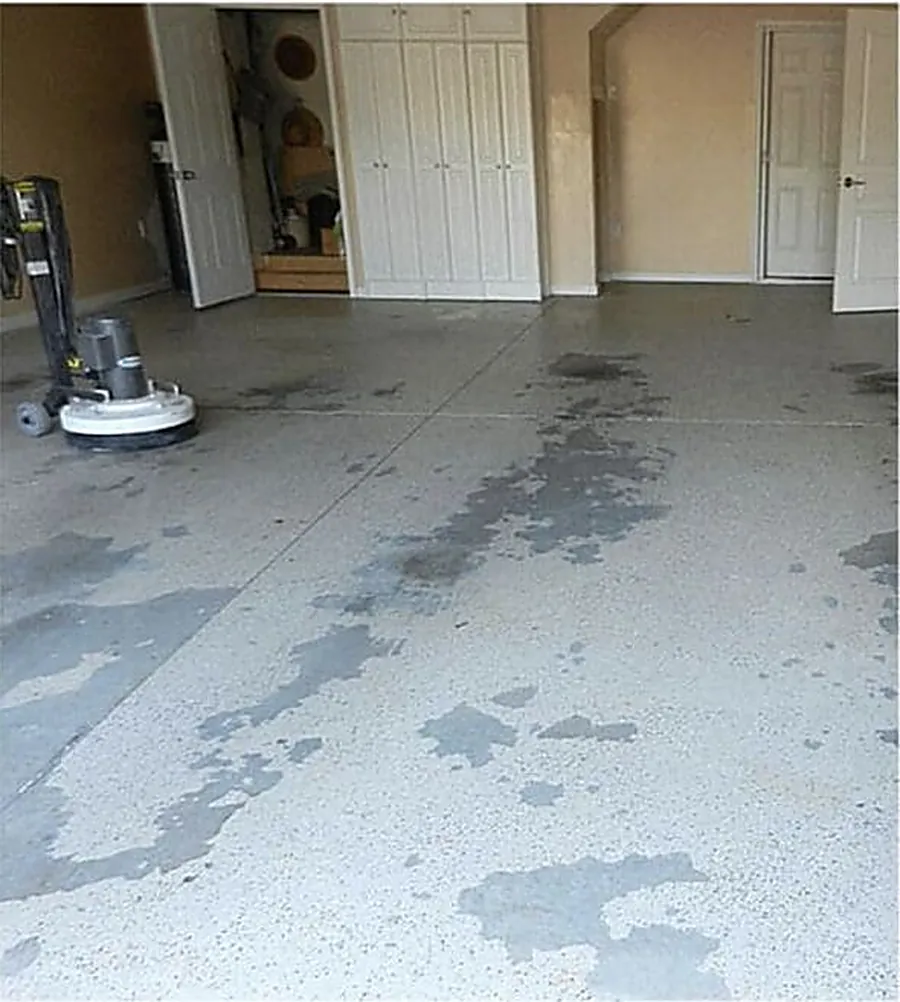
Diamond Grinding — Every Job Starts Here
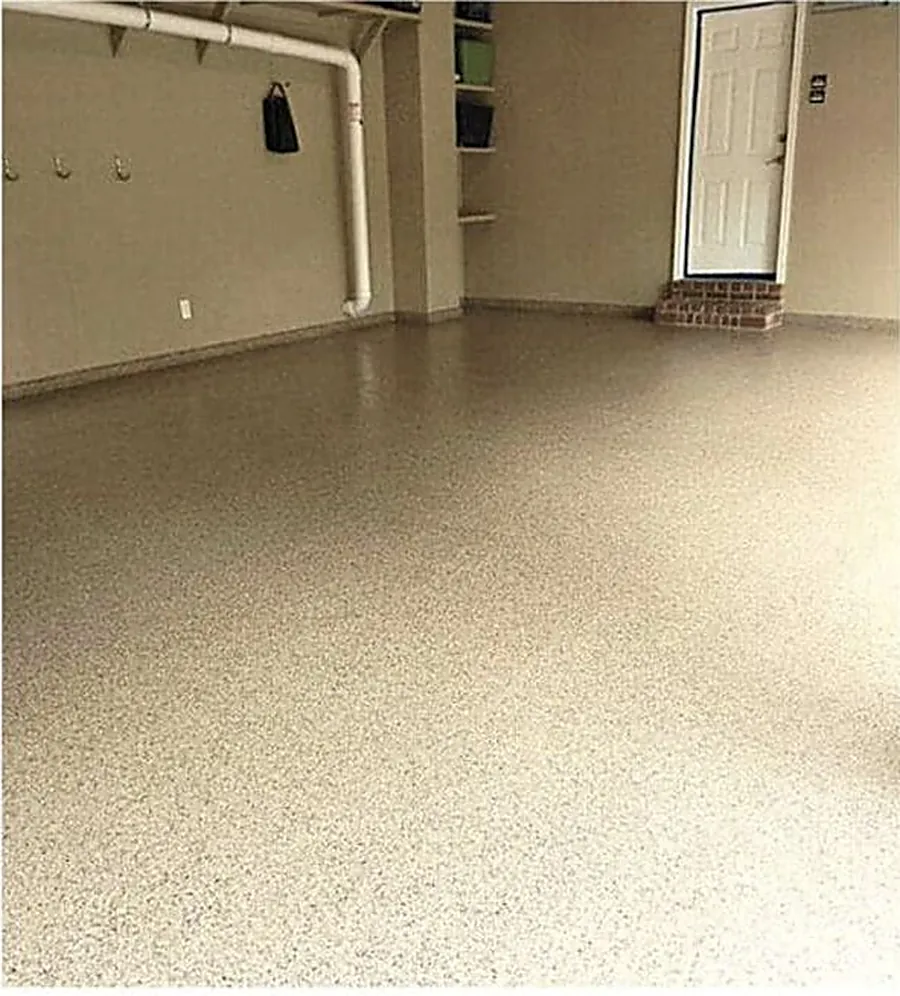
Full-Broadcast Flake Finish
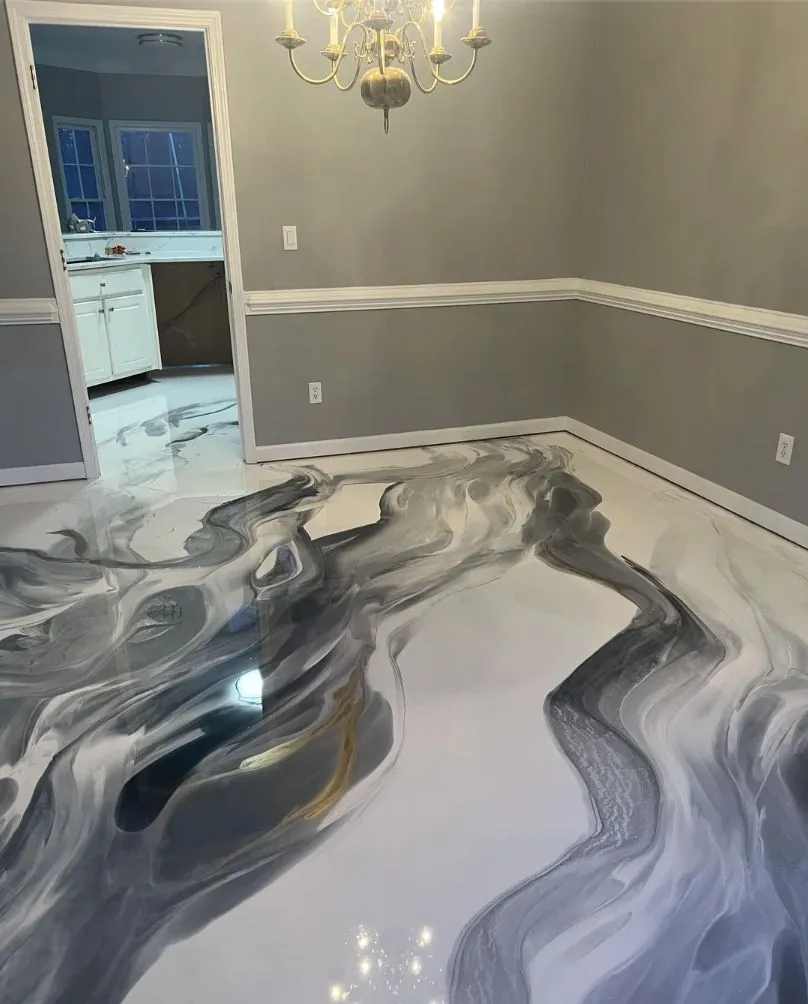
Metallic — Popular in Finished Basements
How Do You Know Your Omaha Basement Needs It?
White chalky residue on the floor or walls. That's efflorescence — mineral salts left behind as water evaporates out of the slab. It means moisture is actively moving through your concrete.
A musty smell that never fully clears. Usually moisture trapped under existing flooring. Running a dehumidifier treats the symptom, not the slab.
Carpet that stays cold and slightly damp. Concrete below grade sits near ground temperature year-round. Anything porous laid over it holds condensation.
Concrete dust on everything stored down there. Uncured, unsealed slabs shed fine dust continuously. It coats boxes, tools, and HVAC filters.
You're finishing the basement. Coating the slab before framing and drywall costs a fraction of what it costs to retrofit around finished walls.
Why Does Basement Prep Differ From a Garage?
The short answer is water pressure from below. A garage slab sits above grade with air on all sides. A basement slab has damp soil pressed against its underside every day of the year, pushing vapor upward through the concrete. Coat over that without checking it first and the coating lifts in sheets within a year or two.
So we test before we quote. A calcium chloride test or in-slab relative humidity probe tells us how much moisture is actually moving through your slab, measured rather than guessed. If the reading is high, we install a moisture-mitigating primer designed to hold back vapor drive before any color coat goes down. If it's low, we skip it and you don't pay for it.
This is the step most cheap bids leave out, and it's the reason most failed basement coatings in Omaha failed. A crew that quotes your basement over the phone without ever testing the slab is guessing with your money.
What Does Basement Floor Epoxy Cost in Omaha?
Basement epoxy in Omaha generally runs $3 to $7 per square foot installed, with moisture mitigation adding roughly $1 to $2 per square foot when testing shows it's needed.
Area
Approx. Square Footage
Typical Price Range
Small finished area
300–500 sq ft
$1,100 – $3,000
Typical Omaha basement
800–1,000 sq ft
$2,400 – $6,500
Full walkout basement
1,200–1,600 sq ft
$3,600 – $10,000
Ranges assume a slab in reasonable condition. Significant cracking, old adhesive from previous flooring, or a failed prior coating adds prep time. We test and quote in writing before anything starts.
If your basement has taken on water once, it will again. Epoxy dries out and cleans up. Carpet and laminate go in a dumpster.
🏗
You're Finishing the Space
Coating bare slab before walls go up is far cheaper and gives you a finished floor you never have to replace.
📦
It's Storage and Utility
Sealing the slab ends the dust problem and makes the space easier to sweep and keep organized.
❌
When It's Not the Answer
If you have an active leak, standing water, or a foundation crack letting water in, fix that first. Coating over an active leak wastes your money and we'll tell you so.
Frequently Asked Questions
Will epoxy stop my Omaha basement from leaking?
+
No, and any contractor who says otherwise is selling you something. Epoxy seals the slab surface against vapor and moisture moving through the concrete. It does not stop an active leak from a foundation crack, a failed sump pump, or water coming in at the wall-floor joint. Those are drainage and foundation repairs. We test your slab and tell you honestly which problem you actually have before quoting.
How do you test a basement slab for moisture?
+
We use either a calcium chloride test, which measures how much moisture vapor comes out of the slab over 72 hours, or an in-slab relative humidity probe, which reads humidity inside the concrete itself. Both give a number rather than an opinion. That number tells us whether your Omaha basement needs a moisture-mitigating primer before the coating goes down.
Can you coat over old tile adhesive or carpet glue?
+
Not directly. Old adhesive has to come off, because epoxy bonds to concrete and not to residue. We grind the slab down to clean concrete first. Basements that had glued-down carpet or vinyl tile take more prep time than a bare slab, and we account for that in the quote rather than discovering it mid-job.
How long before I can use the basement again?
+
Walkable in about 24 hours, furniture back in at 48 to 72 hours. Most Omaha basement jobs take one to two days on site. If moisture mitigation is required, add a day for the primer to cure before the color coat.
Does basement epoxy help with radon?
+
It is not a radon mitigation system and should never be sold as one. Sealing the slab can reduce some soil gas entry through porous concrete, but radon comes in through cracks, the sump pit, and the wall-floor joint. If your Omaha home has tested high for radon, you need a proper sub-slab depressurization system. Coating the floor is not a substitute.
What finish options work best in a basement?
+
Decorative flake is the most common choice because it hides dust and small imperfections and adds grip when the floor is damp. Solid color reads cleaner and more modern but shows every footprint. Metallic is an option for finished living space where the basement is meant to look like a room rather than a utility area.
Ready to Seal Your Omaha Basement Floor?
We’ll test your slab, tell you what it actually needs, and give you a firm written price. No charge for the visit.